
“1776 and The American Missionary Movement”
By Bill MacLeod, Director
 We just celebrated America’s 250th Birthday with July 4th being the anniversary when the Declaration of Independence was adopted by the Continental Congress, the presiding body made up of delegates from the 13 original, American colonies. The document officially declared the United States of America’s independence from British rule on that date in 1776. Colonial America at that time was predominantly Christian which included denominations including Anglicans, Baptists, Catholics, Congregationalists, German Pietists, Lutherans, Methodists, and Quakers among others. Judaism was practiced in small communities after 1654. Religion was fully integrated into the lives of the colonists and completely informed their world view.
But where was the Christian missions movement in 1776?
To understand that question, you must go back over 150 years prior. Early missionary efforts began in the 1620s with the arrival of Puritan settlers. However, most Americans do not realize that when the Pilgrims landed and founded Plymouth colony in modern day Massachusetts, they were met by an English-speaking Indian named Squanto who had been kidnapped six years earlier by an English sea captain; trafficked to Malaga, Spain where Franciscan friars ransomed him and others and focused on evangelizing and educating them. When he was able to sail back to his Wampanoag people, he found they had all died of disease. God had spared his life for a greater purpose. Squanto helped broker peace between the Native American tribes in the region and these new, devout Puritan Europeans, and without his help they likely would have perished.
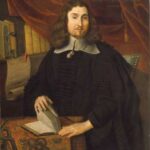
The Massachusetts Bay Colony established missions in the 1640s in New England. John Eliot, known as the “Apostle to the Indians”, started his work in 1646. Eliot translated the Bible into the Algonquin language in 1663. Eliot established “Praying Towns” in the 1670s to persuade and educate Native Americans in the Gospel. Evangelization efforts continued into the 18th century, influenced by the Great Awakening. In his dealings with the Indians, Eliot was not interested in a mere outward change of religious beliefs. Rather, his emphasis was on repentance and belief in Jesus Christ as Savior. Having learned Algonquian, Eliot began teaching Christian truths to the Indians in their own language.
Eliot was instrumental in organizing fourteen Indian villages. No whites were resident, and a form of self-government was instituted according to the pattern given in Exodus 18. Interested neighboring pastors were encouraged to participate in regular instruction. Although most of the evangelization was carried out by personally trained Indian evangelists, Eliot himself traveled on foot and on horseback to bring the gospel to the people. He also brought cases to court to fight for Indian property rights, pleaded for clemency for convicted Indian prisoners, fought the selling of Indians into slavery, sought to secure lands and streams for Indian use, established schools for Indian children and adults, translated the Bible (1663) and twenty other books into Indian languages, and attempted to train Indians to adopt a settled way of life. By presenting the ten commandments to the Indians, Eliot pointed out what God required of them and the punishment which would come from breaking His holy law. All this was preparatory to the comforting words that “God had sent Jesus Christ to die for their sins.”
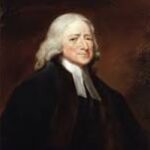 In 1727, a group of Moravians in Saxony, Germany started a round-the-clock prayer meeting that lasted 110 years. By 1737, Moravians had settled in Savannah, Georgia to share the Gospel. At this time, they met John Wesley, from the first Great Awakening and had a profound impact on his ministry. In 1741, the Moravians moved to an estate owned by John Whitfield, another preacher from the Great Awakening, and started ministering to the Delaware Indians in the region. They established the town of Bethlehem and Nazareth in Pennsylvania and moved throughout the colonies sharing the Gospel wherever they went. By 1772, the Delaware were being pushed into Ohio, and the Moravians followed them. They risked great dangers, not only from the other tribes but from the British forces once the Revolutionary War began. The British accused the Moravians of informing the colonialists about troop movements, a charge that was true. While there aren’t that many Moravians per se in the United States nowadays as they left America to evangelize other parts of the world, present day Amish and Mennonite groups are the surviving link back to the Moravians. Mennonites are especially a force for good in the USA today and are a huge part of the missionary movement in America paving the way for other missionaries.
Now, you probably are asking, “So what…how does that affect my life today?” I think it is good to be reminded that God is always at work in our lives, not just in the small details that occupy our daily routines related to food, clothing and shelter, but the larger scenarios involving countries, world powers, and the spread of the gospel. I think it is invaluable for us to realize th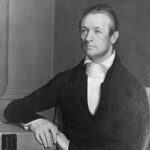 at America didn’t just happen, but God used and continues to use ordinary people of faith to accomplish His purposes over decades even centuries to bring about the world we live in today. He heard and answered the prayers of Moravians in Germany, Puritans in England escaping religious persecution, but also the prayers of an Indian looking for home and finding refugees in a strange new world who desperately needed support that only he could provide. Eventually, Adoniram Judson and so many others would follow, but this was the genesis of the American missionary movement.
Thankfully, our “Independence Day” ushered in a whole new dependence upon the Lord, and reminds us that God is still working, and that you, and I have a larger purpose the Lord Jesus desires for you to see, recognize, and grasp for His glory.
- What deep longing has God put on your heart?
- Do you know where and how you fit into the Great Commission of Matthew 28:19-20?
MissionConnexion can help.
