
“NW Welcomes Aaron Pierce!”
By Bill MacLeod, Director
As you read this, a handful of us will be preparing to travel to the land of the Pharaohs, after four years of planning, and at the invitation of church leaders in the region, for the launch of Mission Connection Middle East (Oct 22-24)! We are extremely humbled and honored for the Lord and His Church there to be provided with this opportunity! Immediately upon our return we head right into MissionConnexion Southwest (Nov 6-7) in Phoenix.
As you pray for us, be praying and looking forward to MissionConnexion Northwest (Jan 15-16, 2027) where our theme is “Built for More” from Ephesians 3:20-21, and speaking of the Middle East, the father of our keynote speaker, Aaron Pierce, with Steiger International once played a concert during the M*sl*m festival of Ramadan in the Middle East designed to radiate Jesus to young people in that part of the world!
Aaron is the President and CEO of Steiger International, a global mission organization his Dad and Mom started in Amsterdam. So, what’s the deal with the word “Steiger”? It is the Dutch word for pier or dock, and in 1983, Aaron’s parents, David and Jodi Pierce started a Bible study on a barge known as “Steiger 14” at the height of the European punk rock movement, reaching punks and anarchists – young people who would never set foot in a church. David started a band called No Longer Music which still tours, and Aaron has picked up the baton his Dad passed him in 2014.
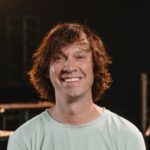 I have interacted with Aaron over the years at conferences we have been at and recently asked him if he would respond to the four questions, we ask all our keynote speakers to help us get to know him better before he comes! Here are his responses…
- How did you come to follow Christ as your Savior?
There wasn’t one defining moment for me. I grew up in a missionary family in Amsterdam, where my parents started a ministry to reach young people who would never walk into a church. From a young age, I had the privilege of being deeply involved in that ministry and seeing God work firsthand. My dad is a very unusual creative pioneer. In the 1980s, he started a punk band as a way to preach the Gospel, and he would take my little brother and me on tour with him. So, growing up, faith was never something abstract or private. It was something to be lived out in the real world.
When I was about 14, I had a powerful experience of the presence of the Holy Spirit and a deep conviction that this was not just my parents’ faith. It was mine. As a teenager, I started a Bible study with my little brother that eventually grew into a ministry reaching hundreds of students in our high school every month. Being actively involved in ministry shaped my faith deeply. I learned early that following Jesus was not something to keep to myself, but something meant to move outward into the lives of people around me.
- Were there any barriers you had to overcome or surrender to understand how you were built for more to serve the Lord in the capacity you do now?
I never really had a rebellion phase, but I have always been a thinker, an intellectual, and a debater. I have never been afraid of hard questions, and part of my journey with God has been learning that faith does not require us to shut down our minds. We can wrestle honestly with the hardest questions, and intellectual pursuit itself can become part of how we worship and serve God.
One major turning point came during a mission trip to Mexico, where I was confronted with deep poverty and injustice. I was already very justice-oriented, and what I saw led me into a serious wrestling with God. How could God allow a world to be this broken? Through that wrestling, something became very clear to me: the deepest problem in the world is sin, and the only ultimate answer to sin is Jesus and the cross. That realization changed the trajectory of my life. I still care deeply about justice and human suffering, but I became convinced that if we do not deal with the deepest spiritual problem, we will never truly deal with the brokenness we see around us. That gave me a much clearer sense of calling and purpose.
- How do you see the Lord using your ministry to help mobilize workers and strengthen the local Church?
Steiger began in Europe, in Amsterdam, reaching young people in a deeply post-Christian culture. Over the last ten years, we have become much more engaged in the United States because we saw that many of the cultural shifts we had been dealing with in Europe were increasingly shaping younger generations here as well. Our heart is to serve and strengthen the local Church.
We create training and resources to help Christians understand post-Christian culture and confidently engage secular young people shaped by things like moral relativism, sexual freedom, spiritual confusion, and distrust of institutional religion. We want to help believers communicate the Gospel in ways that are relevant and contextual without losing its boldness or truth.
We also create discipleship environments that help people explore Jesus, read the Bible, build Christian community, and ultimately connect into the life of the local Church. A major part of our focus now is raising up young missional leaders. God has given us a vision to raise up 1,000 “Burning Arrows,” young leaders with wild, childlike faith who are creative, bold, culturally engaged, and willing to proclaim Jesus wherever God sends them. Today, Steiger has active movements in more than 300 cities around the world.
Through the 1,000 Burning Arrows initiative, we want to identify, develop, and release a new generation of evangelistic leaders who can strengthen the Church in their own cities and also be sent into some of the most difficult and unreached places in the world. What makes this especially exciting is how interconnected the mission field has become.
A young leader learning how to reach secular young people in a city like Portland may develop exactly the skills needed to reach a similar generation in places like Saudi Arabia, where young people are experiencing dramatic social change and unprecedented new opportunities for the Gospel.
Our heart is to strengthen the Church in two ways: by equipping believers to engage the culture around them, and by helping raise up a new generation of evangelistic, missional leaders who can fuel the work of the Church locally and globally.
- What would be one or two things you would want attendees to leave with as a result of attending MCNW 2027 and responding to your challenge?
First, I would want people to leave with a much clearer understanding of the culture we are actually trying to reach. Secular ideology and the cultural changes around us are shaping how an entire generation thinks about truth, identity, sexuality, spirituality, and meaning. I want people to understand that world more clearly, but not simply as a threat. I want them to see the spiritual brokenness underneath it and allow that to produce compassion and urgency.
Second, I want people to leave with renewed faith in the Gospel proclaimed. I believe one of the great temptations for the Church in a post-Christian culture is to lose confidence that the Gospel itself still has power. We can become hesitant, overly cautious, or convinced that people are simply not interested.
But we are seeing the opposite all over the world. People are spiritually hungry. They are asking questions. They are searching for meaning. And when Jesus is proclaimed with clarity, boldness, relevance, and love, lives are still transformed.
Wouldn’t you love to be one of the “1000 Burning Arrows?” effort? Wouldn’t you love to get more engaged with Portland’s own youth sub-culture? Come check out Aaron and the limited time he and his Steiger team have to be with us during MissionConnexion Northwest and discover how uniquely you were Built for More!
